As part of the ECHOES Second Annual Event, the ECHOES Open Session, held at the National Museum in Poznań (Poland), marked a key moment in the development of the European Collaborative Cloud for Cultural Heritage (ECCCH), bringing together project coordinators, sister projects, representatives of the European Commission, and the wider cultural heritage community to reflect on progress, alignment, and future collaboration.
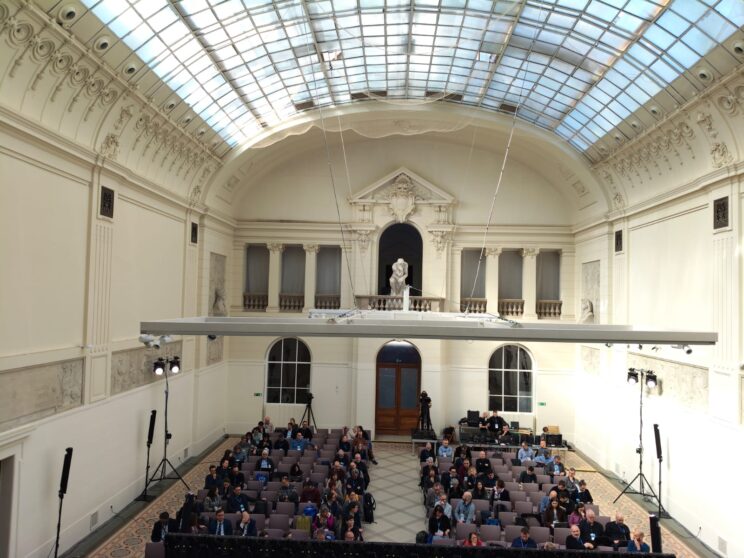
The event was structured across both internal working sessions and a public programme. While the morning focused on coordination activities involving project members, sister projects and governance bodies, the afternoon opened to a broader audience, showcasing key achievements and fostering dialogue across the wider cultural heritage community.
A shared vision for a European ecosystem
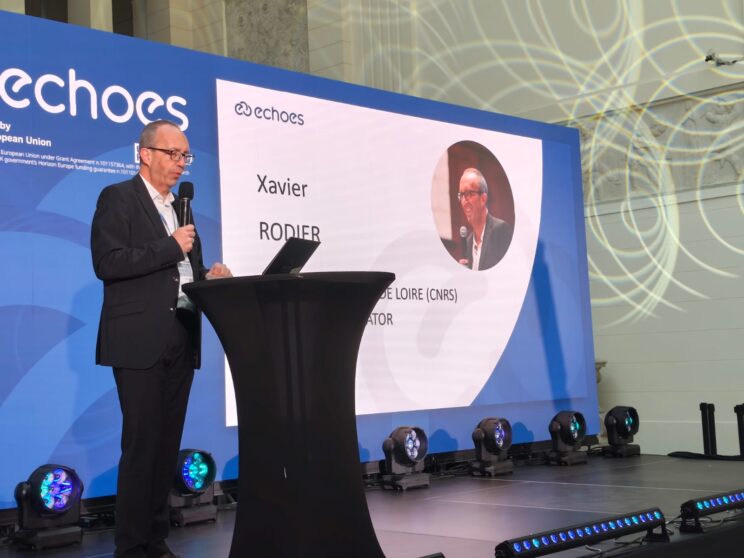
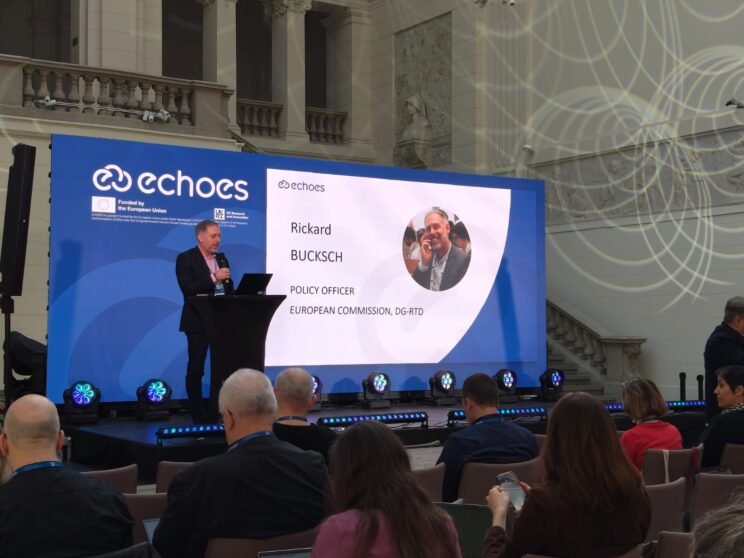
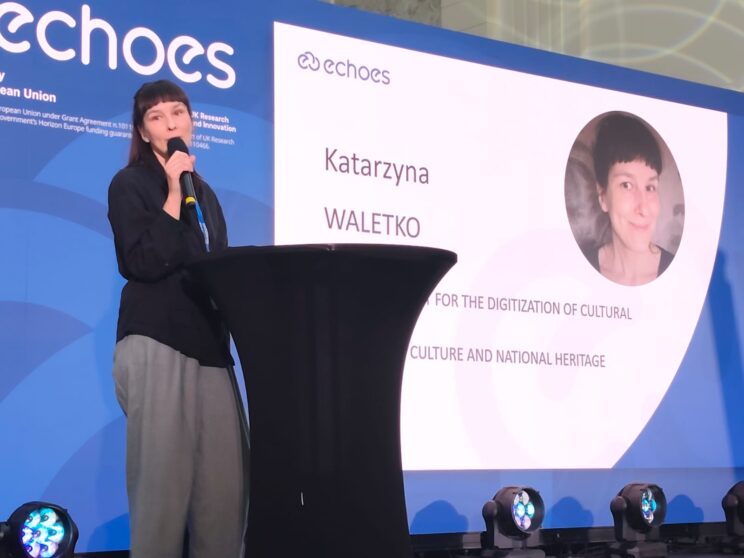
Opening remarks by Xavier Rodier (CNRS), Rickard Bucksch (European Commission, DG-RTD), and Katarzyna Waletko (Polish Ministry of Culture) highlighted the strategic importance of this initiative. The Cultural Heritage Cloud was framed as a collective European effort requiring strong coordination, shared objectives, and long-term sustainability.
Throughout the day, discussions addressed community building, ecosystem design, technical development, and governance models, laying the foundations for a robust and interoperable cloud infrastructure.
Building the foundations: community, ecosystem and technology
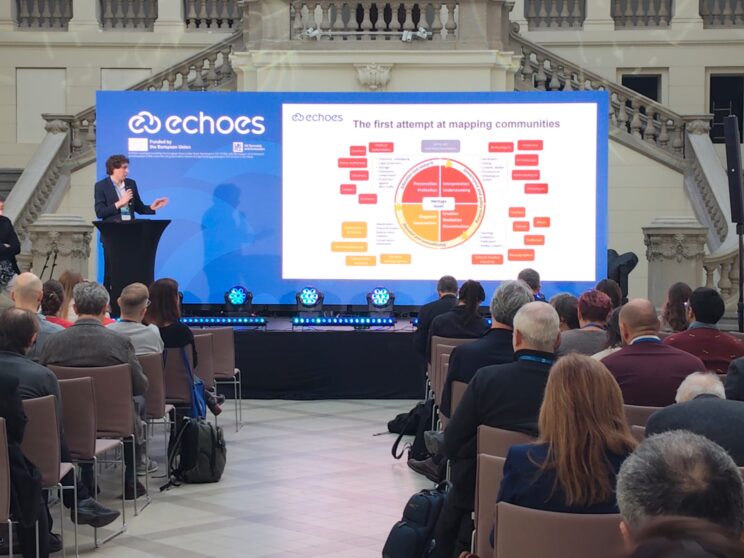
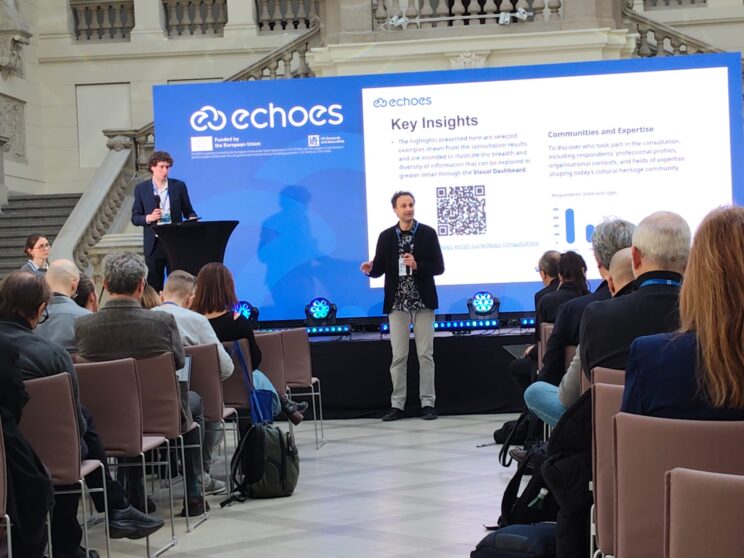
The session “Mapping and building an ECCCH community”, chaired by Rémi Petitcol (FSP) and Claudio Prandoni (ARIADNE), presented the results of the ECHOES consultation process and outlined the next steps toward building an engaged and sustainable community.
This was followed by “ECCCH ecosystem”, chaired by Laure Barbot (DARIAH) and Areti Damala (CNRS), which explored how the ecosystem is taking shape and how the ECHOES Integration Framework will support its structure and long-term development.
Further sessions addressed the advancement of technical development, led by Joanna Kowalska (PCSS) and Dimitris Kotzinos (CNRS), highlighting progress on interoperability and integration guidelines, as well as the upcoming Cloud architecture.
The morning concluded with a session on multilevel governance and sustainability, chaired by Philippe Vendrix (CNRS) and Vania Virgili (E-RIHS), presenting key outcomes related to cost-benefit analysis and value chains.
From strategy to implementation
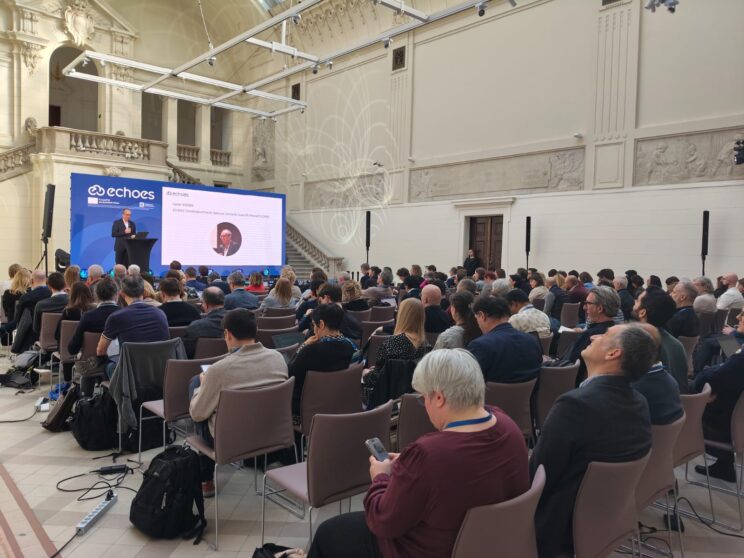
The afternoon public session showed how ECHOES is moving into action.
Following opening remarks by Robert Pekal (PCSS), Rickard Bucksch, Katerina Moutogianni (European Commission, DG CONNECT), Xavier Rodier, Patricio Ortiz-de-la-Torre (REA), and Katarzyna Waletko, the programme featured a keynote by Tomasz Parkoła (PCSS) on the PIAST AI Factory and its potential for the cultural heritage sector.
A central session, “ECHOES in action: building the Cultural Heritage Cloud”, brought together key insights:
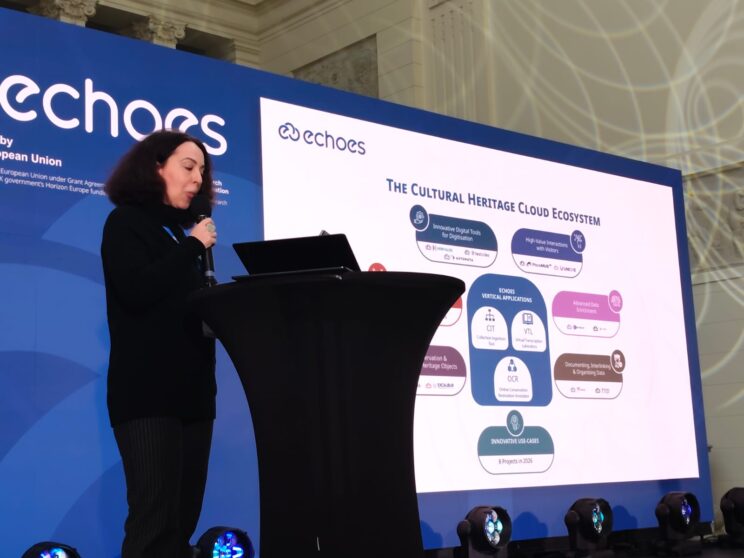
- Xavier Rodier (CNRS) presented the emerging Cultural Heritage Cloud ecosystem
- Charlotte Gallini (FSP) shared findings from the ECHOES consultation
- Dimitrios Kotzinos (CNRS-CYU) and Joanna Kowalska (PCSS) introduced real use cases
- Lena Czech (CNRS) addressed governance and sustainability
Together, these contributions demonstrated the transition from strategy to implementation.
Sister projects: building the ecosystem together
A central highlight of the event was the session “Cultural Heritage Cloud ecosystem: Discussion with sister-projects”, chaired by Mailane Sampaio (CNRS).
In her introduction, Mailane Sampaio emphasised both the scale and ambition of the initiative: an ecosystem that will bring together 22 projects, a €110 million investment, and a shared timeline running until 2029. She highlighted a key challenge: ensuring that these projects evolve as a coherent and integrated system, rather than as fragmented initiatives.
The session was structured in two rounds, each guided by targeted questions designed to explore how projects contribute to this shared vision.
First Round of Sister Projects
UNICHE (Angelina Broukou), COLOURS (Daniele Ferdani), AUTOMATA (Gabriele Gatiglia), EXCALIBUR (Georgia Georgiou), PlaceMUS XR (Eva Pietroni), INFINITY (Valentina Presutti)
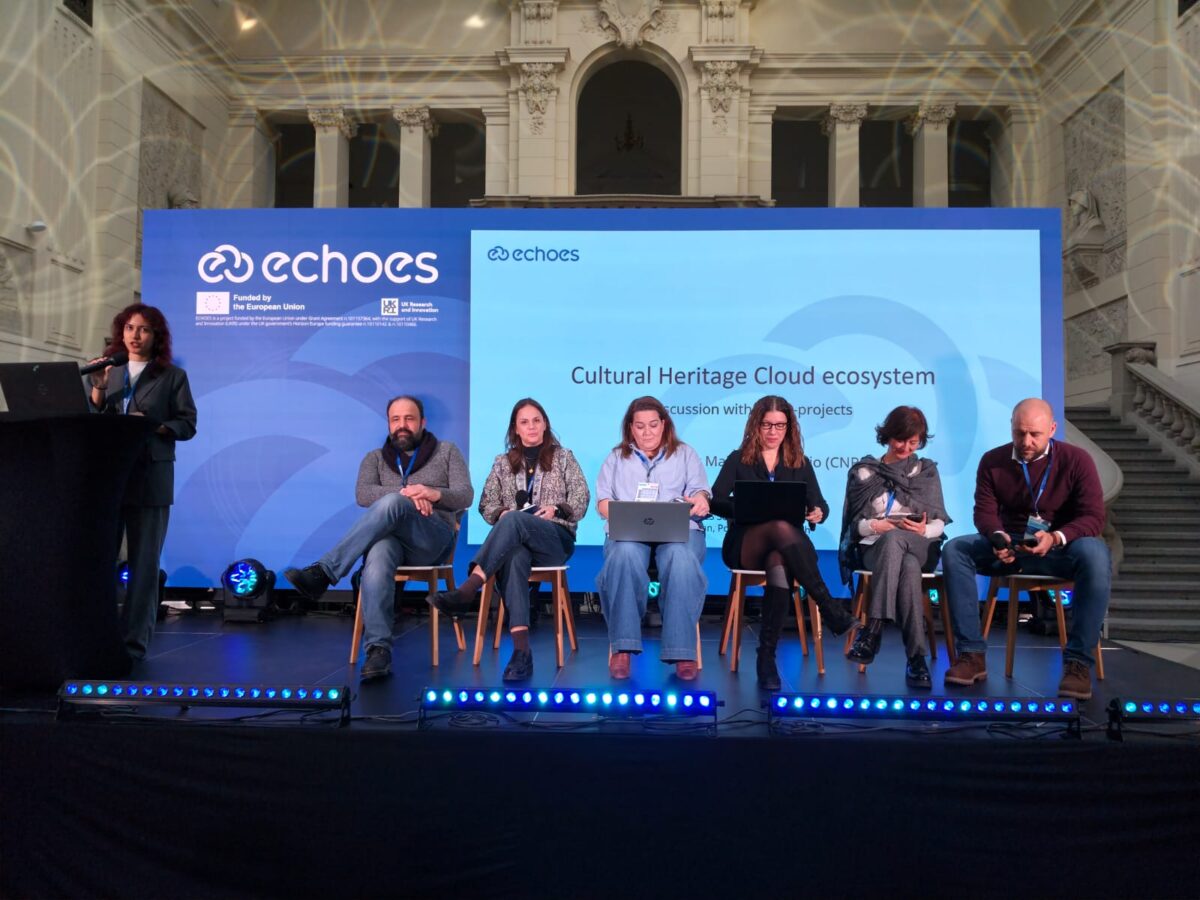
The first round focused on communities, users, and adoption. Projects were invited to reflect on:
- the diversity of institutions within their consortia and the communities they represent
- how their tools respond to real needs
- and how adoption can be supported across different heritage sectors
They were also asked to present use cases illustrating interdisciplinary collaboration, highlighting the complexity of working across domains and the challenges they aim to address.
Second Round of Sister Projects
HERITALISE (Mikel Borras), TEXTaiLES (Georgios Ioannakis), MusicSphere (Eleftherios Anastasovitis), ECHOLOT (Lozana Rossenova), Stratigraph (Emanuel Demetrescu)
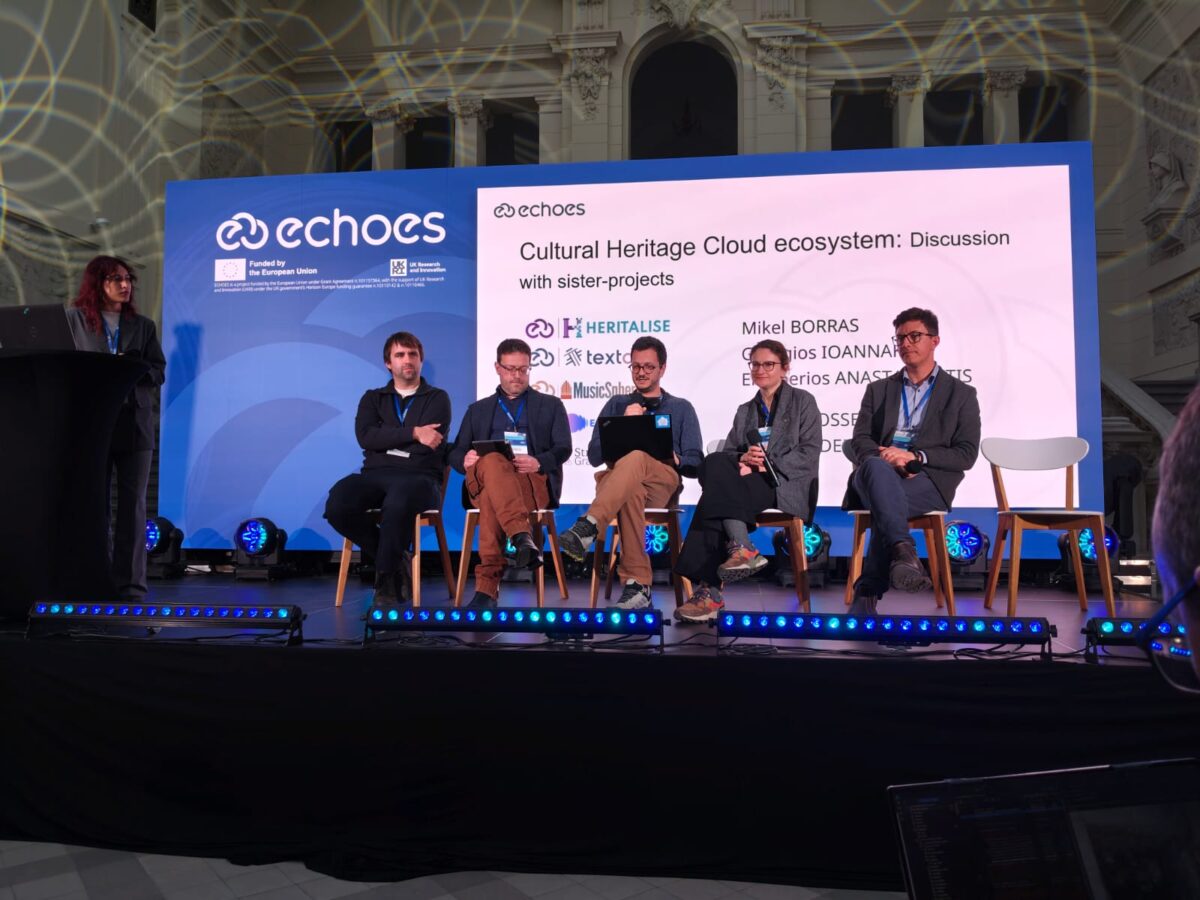
The second round focused on types of heritage and collaboration within the ecosystem. Questions addressed:
- the integration of tangible and intangible cultural heritage
- the development of tools supporting these different dimensions
- and how projects foresee interacting with others to build synergies
MusicSphere, presented by its coordinator Eleftherios Anastasovitis (CERTH), contributed to the discussion by outlining its approach in relation to the questions addressed during the session.
Across both rounds, a consistent message emerged: integration, collaboration, and complementarity are essential to the success of the Cultural Heritage Cloud.
Strengthening European collaboration
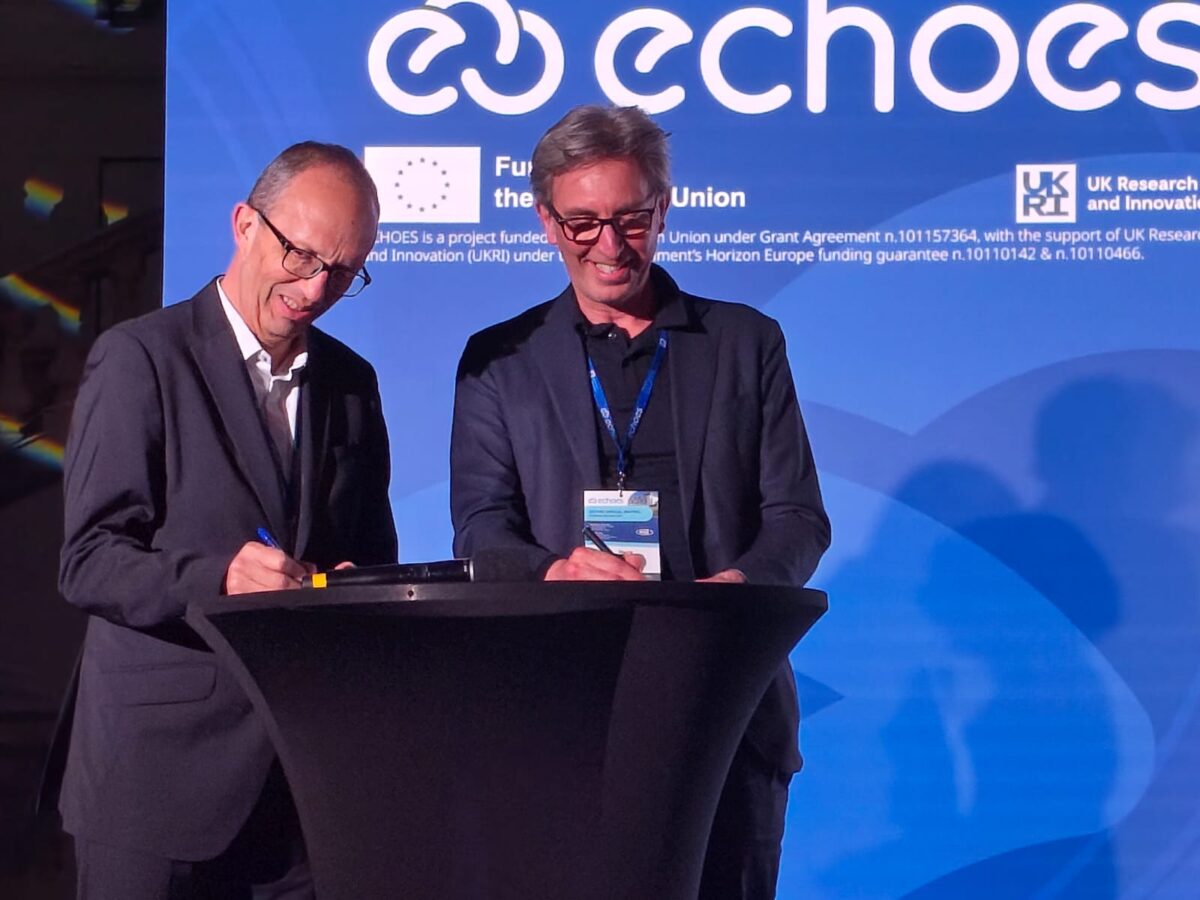
A key moment of the event was the presentation of the Joint Statement between the Europeana Initiative and the ECHOES project, highlighting the complementarity between the Common European Data Space for Cultural Heritage and the European Collaborative Cloud for Cultural Heritage.
While the data space focuses on access, sharing, and reuse of high-quality cultural heritage data, the Cultural Heritage Cloud is designed as a collaborative research and innovation environment, enabling advanced analysis, workflows, and the development of Heritage Digital Twins.
The statement emphasised that, together, both initiatives:
- enhance the sharing, exploration, and transformation of digital heritage at scale
- support a wide range of users, from researchers to cultural institutions and creative industries
- and align with key EU priorities, including the European Data Strategy, open science, and digital sovereignty
Importantly, both initiatives committed to strengthening collaboration through:
- interoperable standards (including alignment between the Europeana Data Model and the Heritage Digital Twin Ontology)
- integrated data flows and workflows, reducing duplication and improving efficiency
- joint capacity-building and training efforts
- and shared governance mechanisms, including a joint task force
This collaboration represents a major step toward building a connected and interoperable digital ecosystem for cultural heritage in Europe.
Looking ahead
The ECHOES Open Session in Poznań demonstrated that the Cultural Heritage Cloud is evolving into a coordinated European reality.
For MusicSphere, participating in this exchange alongside sister projects reaffirmed the importance of active engagement within this growing ecosystem.
This balance of internal coordination and public engagement reflects ECHOES’ dual approach: building strong foundations while connecting with the wider European cultural heritage ecosystem.